Marina Vis Guide: Bays, Berths and Best Anchorages Around Vis Island
Marina Vis and the Best Bays & Berths on Vis Island
Island Vis is one of those Islands in Croatia that sailors talk about for years after they leave. Tucked out in the open Adriatic, just far enough from Split and Hvar to feel remote, it combines a lively harbour at Marina Vis with quiet coves, famous beaches and a few unforgettable anchorages.
If you are planning a sailing route from Split, Trogir or a nearby marina, Vis Island will almost certainly sit somewhere in the middle of your itinerary. Marina Vis in the town of Vis, Komiža port on the western side, Porat on Biševo, Stiniva bay and the Budihovac lagoon form a perfect circuit of bays and berths around the island.
Marina Vis (Vis Town Port)
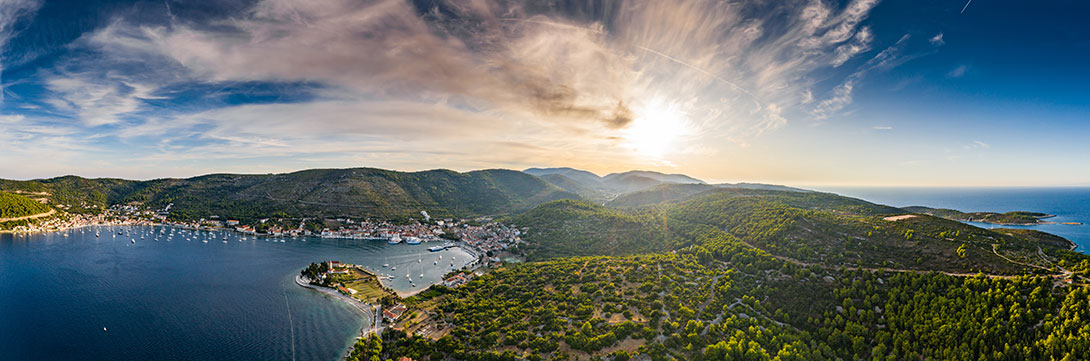
Vis town sits in a deep, sheltered bay on the island's northern shore. There is no large concrete marina like you might find in Hvar or Brač, but the town waterfront and mooring field are organised and managed as Marina Vis, with seasonal staff, services and clear berthing zones.
Most boats berth along the central waterfront in Viška Luka or in the slightly quieter Kut area further east. Expect roughly 60 to 100 berths, depending on the season and how tightly the harbour team decides to pack visiting yachts. Depths along the quay are usually between 2 and 4 metres, which suits most charter yachts.
Water and electricity are available on the pier, and a reception desk nearby lets you pay your mooring fees and arrange small services like bike or scooter rental.
Because Vis is such a popular stop, berths fill quickly in high season.
The best approach is to arrive early in the afternoon, especially in July and August.
Staff will generally guide you to a stern-to berth on laid lines. When the large ferry arrives, it can throw up a surprising wake that runs along the quay, so it is wise to leave some space behind your stern and to keep your lines firm and well sprung.
Once you are settled in, exploring the town of Vis on foot is a delightful experience. The old streets behind the quay still follow the lines of the ancient Greek settlement of Issa, and you can see remains scattered around town. Small bars and konobas line the waterfront, while behind them you will find bakeries, shops and a few surprisingly good wine bars that pour Plavac and local white varieties. An evening walk around the bay, from the busier Luka part to the more peaceful Kut, gives you different views of the harbour and a choice of places to eat.
If the quay is full, there are buoys laid out across the bay and some anchoring spots in deeper water. Ask the harbour staff for directions; they deal with this situation almost every night in peak season.
Komiža Port and Bay
On the western side of the island, the fishing town of Komiža feels very different from Vis. Approaching from offshore, you will see the wide horseshoe of the bay, framed by headlands and backed by steep terraces. It takes several hours under sail to reach Komiža from the Split area, which is part of the reason it feels so special when you finally round the last headland.
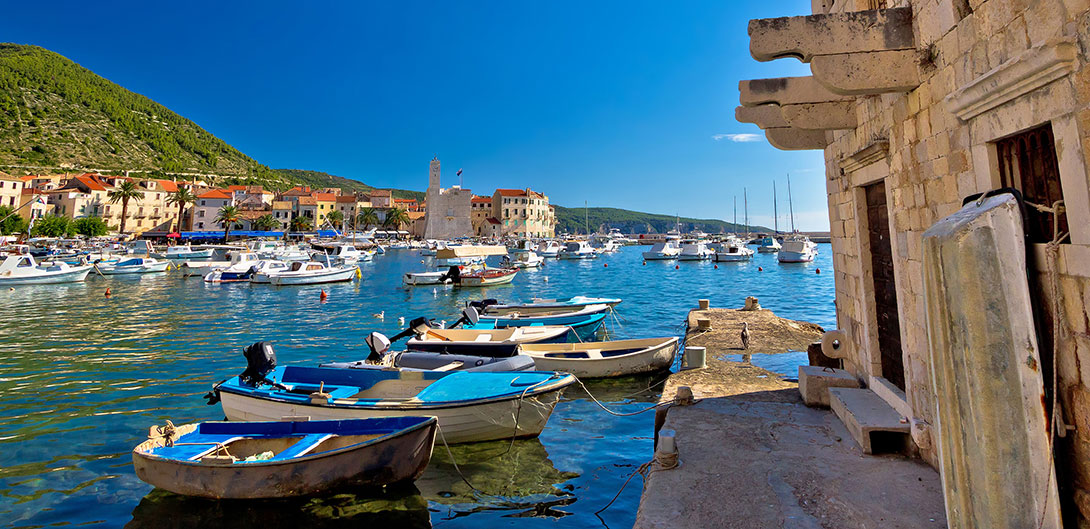
Komiža has a long fishing tradition and was once one of the Adriatic's most important fishing centres. You can still feel that heritage around the harbour. Everyday life happens right on the quay, and the small Fishing Museum in the old tower above the port tells the story of the town's past, including the famous wooden fishing boat known as the Falkuša.
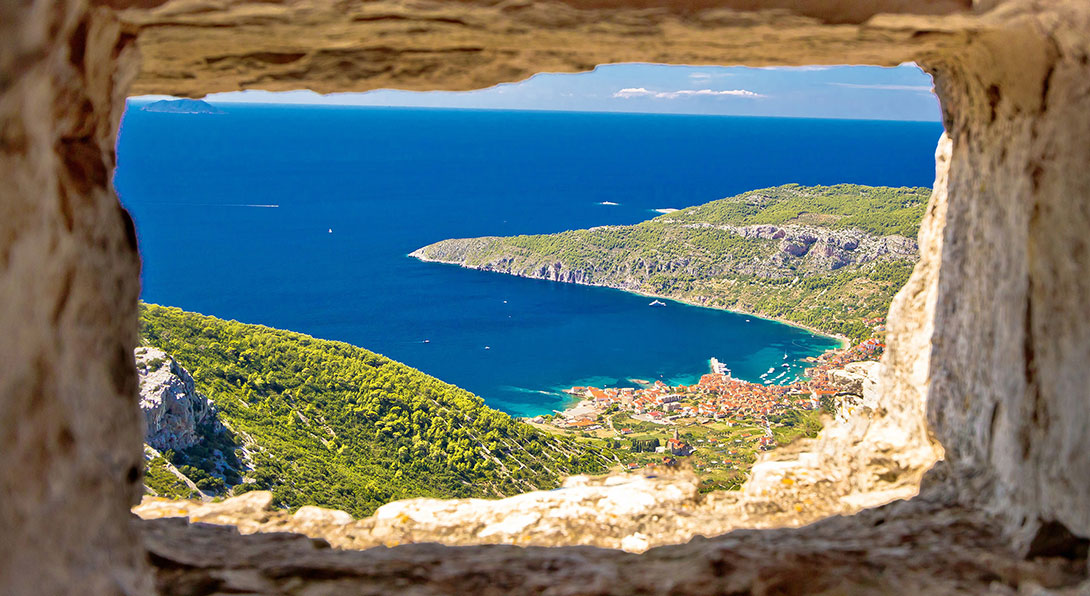
For sailors, Komiža offers around 30 berths on the inner side of the breakwater, plus additional buoys laid in the bay. Depths at the quay range roughly from 2 to 4 metres. The breakwater was rebuilt in the late 1990s and provides shelter inside the port area, but the bay itself is very exposed to westerly and south-westerly winds. In those conditions, waves can build quickly, making the approach and berthing uncomfortable or even unsafe for less experienced crews.
In settled weather, Komiža is one of the most atmospheric overnight stops in Dalmatia. Before dinner, it is worth walking up the hill to the St Nicholas monastery for a panoramic view over the bay. Back down on the waterfront, restaurants specialise in local fish and lobster, and you can pair them with a strong glass of Plavac red from Vis vineyards.
In strong southerly or south-westerly winds, it is more prudent to skip Komiža and either remain in Vis town or choose a more sheltered bay on the eastern or northern side of the island.
Porat on Biševo and the Blue Cave
Southwest of Vis lies Biševo, a small island best known for one remarkable sight: the Blue Cave (Modra špilja). The usual starting point for a visit is Mezoporat bay, where tour boats line up, and tickets are sold for the official small ships allowed inside the cave. The most intense blue light inside usually occurs late in the morning, roughly between 11 and noon, when the sun is at the right angle above the underwater entrance.
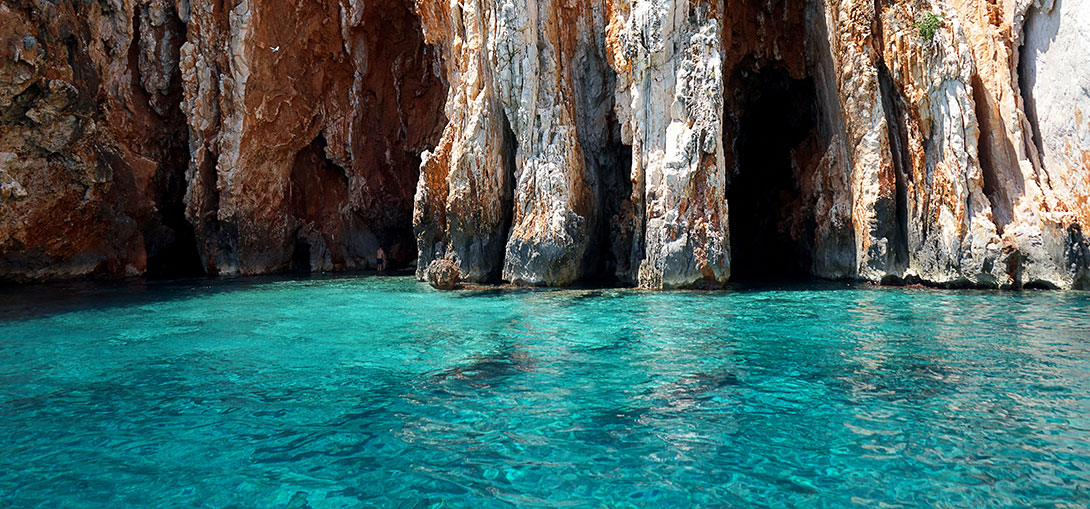
A little further around the coast, on the western side of Biševo, you will find Porat, a sandy bay that makes a charming anchorage in settled weather. The bay is well protected from many directions but open to strong south-westerlies, which can send an uncomfortable swell into the anchorage. The sandy bottom provides decent holding, and with moderate draught, you can anchor close enough to the beach while still swinging safely.
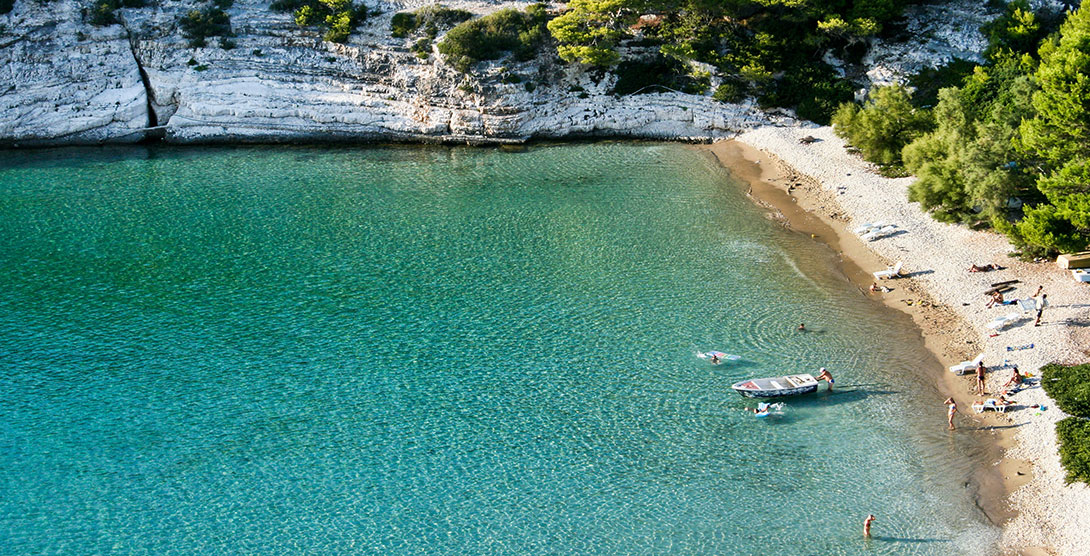
Porat itself feels far quieter once the day-trip boats leave in the late afternoon. There is a small sandy beach, a couple of simple restaurants and just a few cottages scattered on the slope. You can swim from the boat in the clear water, then take a short walk inland to an almost abandoned settlement that looks out over the island and the sea.
In high season, space in Porat can be limited, so keep an eye on distancing and swing room. If things feel crowded, you can move to nearby Salbunara, a smaller cove that sometimes offers more peace.
Stiniva Bay
On the southern shore of Vis, Stiniva looks like it belongs in a film, which is probably why it often appears in travel magazines and social feeds. Approached from the sea, you see only a narrow cut in the cliffs, roughly four or five metres wide, that opens suddenly into a hidden cove with a pebble beach and steep rock walls rising on both sides.
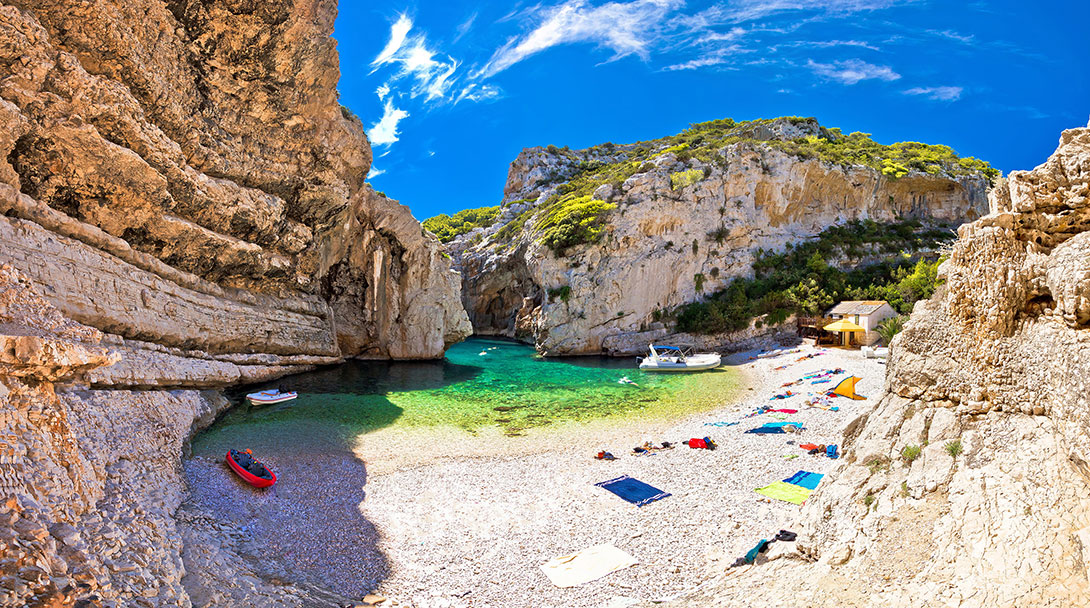
There is no road down to Stiniva; only a hiking path, which has helped preserve its wild atmosphere. From the water, most skippers either anchor outside the entrance and go in with the dinghy, or anchor carefully in the small pool offshore, taking account of limited swing room and the number of other boats already present. The entrance itself is narrow, so it is best approached in calm conditions and in daylight.
Inside the cove, you will usually find a tiny seasonal bar or restaurant where you can sit in the shade with a drink. For the best colours, visit in the morning, when the sun reaches into the cove and lights up the water in shades of blue and green against the pale rock.
Stiniva is magical, but it is more of a daytime destination than an overnight stop. In summer, it gets busy with small tour boats from nearby islands, and the tight space and changing breeze make it less comfortable to sleep aboard. If you want to stay overnight close by, it is often better to move to one of the nearby bays on the southern or eastern coast of Vis, which offer more room.
Budihovac Lagoon
To the south-east of Vis lies one of the prettiest lagoons in the central Adriatic. The island of Veli Budihovac is surrounded by shallows and smaller islets that form a natural pool of turquoise water, commonly known as the Blue Lagoon of Budihovac. The lagoon is sheltered by Mali Budihovac and the rock of Sanak, which protects it from many wind directions and makes it an attractive anchorage in settled conditions.
Depths here range roughly from 1 to 4 metres, with a sandy bottom in many places, so good light and careful pilotage are essential. The entrance is shallow, and you need to watch out for patches of rock and reef around Mali Budihovac and Sanak. Many skippers choose to approach from the south, keep a careful eye on the water colour, and stop where the sounder still shows a comfortable depth beneath the keel. Some boats prefer to anchor just outside the lagoon and go in by dinghy.
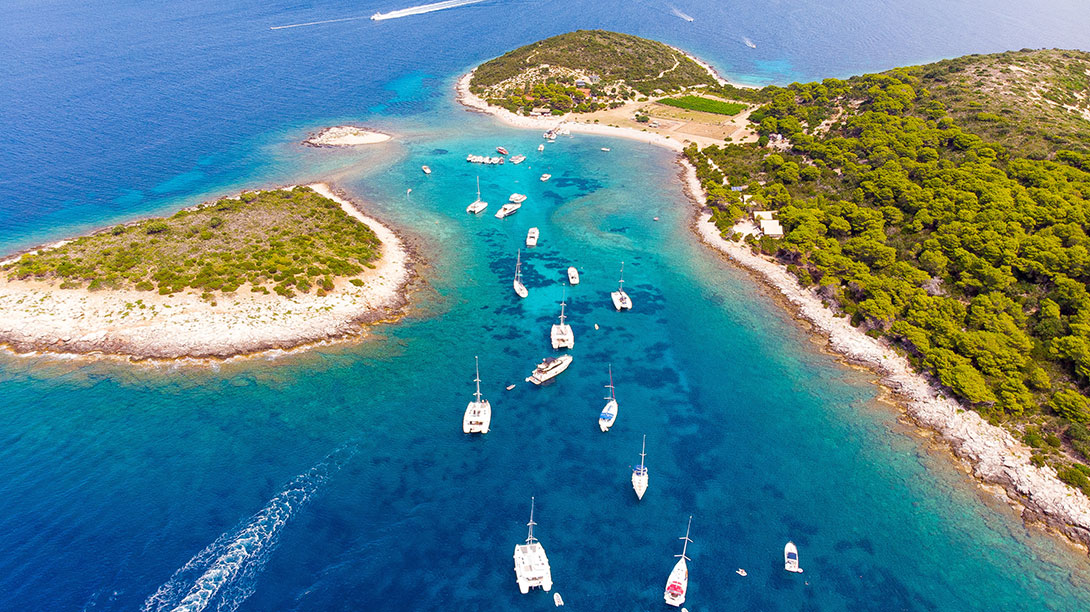
The lagoon itself is an excellent spot to spend a lazy afternoon. The water is crystal clear and perfect for swimming and snorkelling. There is a simple beach restaurant ashore that usually opens in high season and serves fresh fish, grilled dishes and local wine. As the afternoon boats leave, the bay becomes much quieter, and on a calm evening, it is a lovely place to spend the night at anchor.
One more reminder about depth: at low tide, some parts of the lagoon can be as shallow as two metres, so deeper draft yachts need to be conservative when choosing where to drop the anchor and how much chain to let out.
Quick Comparison of Bays, Marinas and Berths on Vis Island
Planning Your Vis Island Sailing Stop
Used well, Marina Vis and the surrounding bays can become the highlight of a week-long charter. A popular pattern is to spend the first night in Vis town, take a day to explore Stiniva and Budihovac, then continue to Komiža and Biševo if the weather allows.
Whichever route you choose, arrive early when you can, always keep a backup plan for nights when the forecast turns, and do not hesitate to ask local harbour staff for advice. They see hundreds of visiting yachts each summer and usually know exactly where you will be most comfortable and safe.
With its combination of a practical harbour at Marina Vis and a ring of beautiful bays and berths all around the coast, Vis Island truly earns its reputation as one of the top sailing destinations in Croatia.